The 2026 World Cup Has Become a Charity Program for Underdogs. The Favorites Would Like Their Points Back.
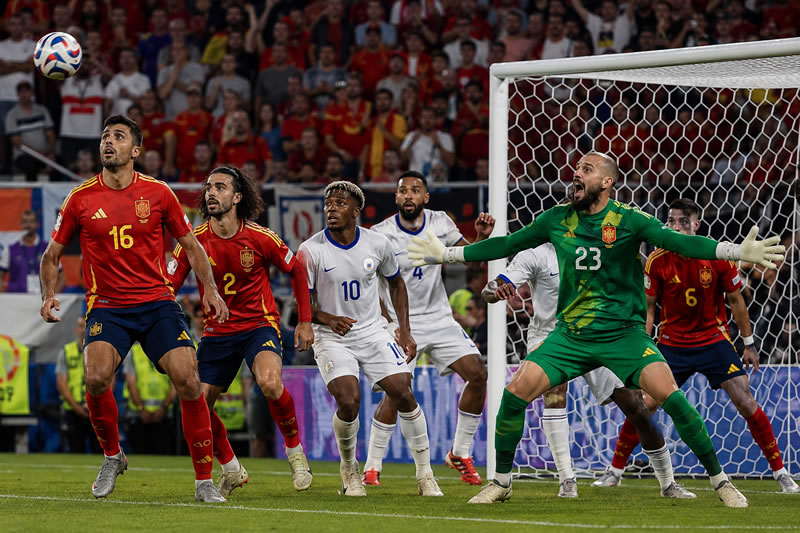
Spain can’t beat Cape Verde. Belgium can’t beat Egypt. Uruguay can’t beat Saudi Arabia. New Zealand nearly beat Iran. Somewhere, football logic is sitting alone in a corner wondering what happened.
The 2026 FIFA World Cup was supposed to be a celebration of football’s biggest nations. Instead, after the opening week, it has become a celebration of confusion.
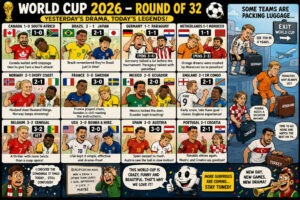
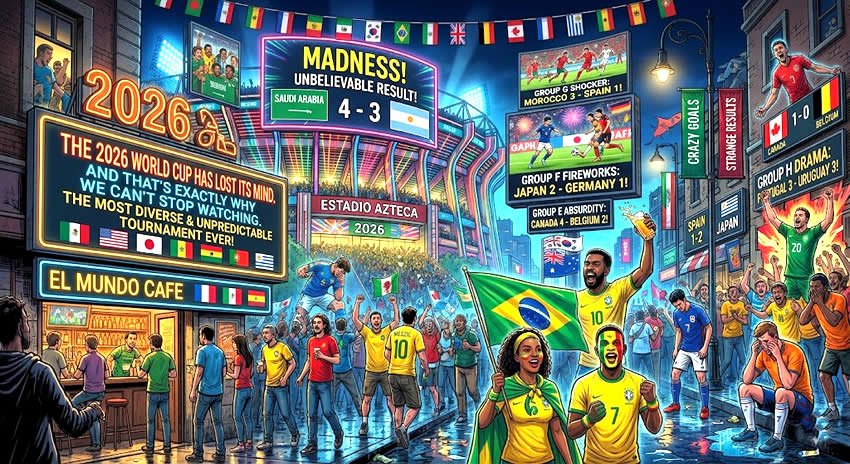
The favorites arrived carrying rankings, superstar players, billion-dollar market values, and enough confidence to fill three stadiums. The underdogs arrived carrying hope, determination, and apparently a secret plan to ruin everyone’s prediction brackets. The result has been glorious chaos. Spain, one of the tournament favorites, could only manage a 0-0 draw against World Cup newcomers Cape Verde. Belgium was held 1-1 by Egypt. Uruguay dropped points against Saudi Arabia. Iran needed a late goal just to escape New Zealand with a draw. In one extraordinary day, all four World Cup matches ended level, something not seen since 1958.
If you listen carefully, you can almost hear millions of football fans deleting tweets they wrote before the tournament started.
The funniest part is that the favorites are not actually playing badly. Spain dominated possession against Cape Verde and created plenty of opportunities. They simply forgot the most important part of football: scoring. Cape Verde’s veteran goalkeeper, a 40-year-old hero named Vozinha, spent the evening making saves and destroying betting accounts. One bettor reportedly lost nearly a million dollars backing Spain to win. Somewhere in Cape Verde, a man who predicted the draw is now being treated like a prophet.
This is the magic of the World Cup. Every four years we convince ourselves that football is a science. We have rankings. We have expected goals. We have tactical models. We have artificial intelligence predicting champions. Before the tournament, Spain, France, England, Argentina, Brazil, and Portugal were considered the leading contenders. Analysts discussed probabilities with the confidence of investment bankers. Then the tournament started and football reminded everyone that a goalkeeper having the game of his life can destroy six months of analysis in ninety minutes.
The expanded 48-team format was supposed to create more mismatches. Critics worried that weaker nations would simply become target practice for the giants. Instead, many of those smaller nations appear to have interpreted the expansion as a personal invitation to cause trouble. Egypt frustrated Belgium. New Zealand went toe-to-toe with Iran. Saudi Arabia frustrated Uruguay. Cape Verde became the most popular country on earth for anyone who enjoys watching favorites suffer. The underdogs may not be winning every match, but they are refusing to lose, which in tournament football can be just as powerful.
Meanwhile, the fans are experiencing football exactly as nature intended: emotionally and irrationally. One minute they are dreaming about lifting the trophy. The next they are calculating obscure qualification scenarios involving yellow cards, goal difference, and results from matches they previously did not know existed. Entire nations are discovering that heartbreak feels exactly the same whether it happens in a packed European stadium or inside a perfectly air-conditioned North American venue. Technology can cool the temperature. It cannot cool panic after conceding in the 89th minute.
Then there are the commercials. Every World Cup somehow finds new ways to remind viewers that football is also a business. The match starts. A sponsor appears. Halftime arrives. More sponsors. Statistics arrive courtesy of another sponsor. Replays are sponsored. Interviews are sponsored. At this rate, the winning goal of the final may be interrupted by a message thanking viewers on behalf of an insurance company. Even FIFA itself has faced criticism that the tournament is becoming increasingly commercialized, with more matches, more ceremonies, more branding, and more interruptions surrounding the game itself.
And of course, no World Cup would be complete without referees becoming accidental celebrities. Every fan base believes the officials are helping someone else. The evidence is always overwhelming until you ask supporters of the other team, who possess an entirely different collection of evidence proving the exact opposite. The referees are probably the only people at the tournament less happy than the bettors who put money on Spain.
Yet despite all the surprises, confusion, controversy, and emotional damage, the World Cup feels wonderfully alive. Half of the matches have already ended in draws, many involving significant underdogs. The traditional powers remain dangerous, but suddenly nobody looks invincible. That uncertainty is what makes this tournament special. If the favorites always won, we would stop telling stories about it. Instead, football continues producing moments nobody expected. The giants are nervous. The underdogs are dreaming. The fans are exhausted.
In other words, the World Cup is perfect.