Pistons Lock Down Magic 98–83 in Game 2 as Cunningham Takes Over and Series Shifts
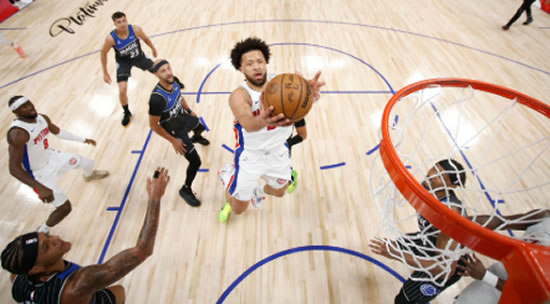
Detroit’s defense and Cade Cunningham’s all-around performance silence Orlando and even the series at 1–1
The Detroit Pistons responded exactly how a playoff team should, defeating the Orlando Magic 98–83 in Game 2 to even the series 1–1. But this wasn’t just a bounce-back win—it was a full identity shift. Detroit didn’t outshoot Orlando or overwhelm them with star power. They controlled the game, slowed it down, and made every possession uncomfortable.
Let’s start with the numbers that actually tell the story.
Detroit was led by Cade Cunningham, who delivered a composed and efficient performance with 24 points, 8 assists, and 6 rebounds. He shot 9-of-18 from the field, controlled the pace, and never looked rushed. This wasn’t a highlight-heavy game—it was a “read the game, make the right play” performance, and that’s exactly what Detroit needed.
Inside, Jalen Duren made his presence felt with a double-double (15 points, 13 rebounds), including multiple key defensive boards that shut down Orlando’s second-chance opportunities. Detroit as a team outrebounded Orlando 48–39, and that gap mattered more than anything flashy.
They also got key scoring from Jaden Ivey, who added 19 points, attacking the rim and providing bursts of offense when things slowed down. The Pistons didn’t rely on one player—they had three solid contributors and a system that worked.
Now compare that to Orlando.
The Orlando Magic struggled offensively all night, and the stats back it up. They shot just 38% from the field and an even worse 27% from three-point range. That’s not just “a cold night”—that’s a team being forced into bad shots.
Paolo Banchero led Orlando with 21 points, but it came on inefficient shooting (8-of-21 FG). He had to work for everything, and Detroit made sure nothing came easy. Every drive was contested, every mid-range shot challenged.
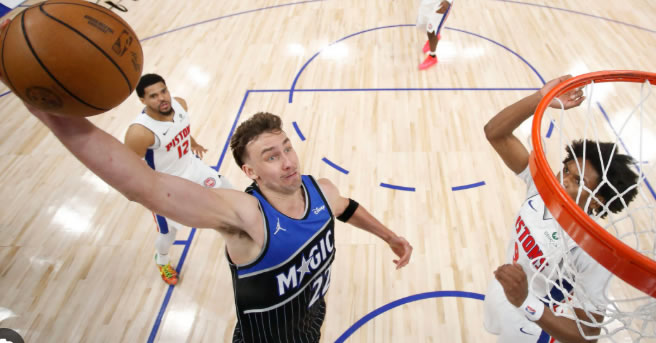
Franz Wagner added 17 points, but like Banchero, he never found rhythm. The Pistons’ defense forced him into tougher looks and limited his ability to create clean scoring opportunities.
But here’s the real difference in this game—and it’s not just individual stats.
Detroit forced 14 Orlando turnovers, converted those into easy points, and consistently won the “small moments” that decide playoff games. They also held Orlando to just 18 points in the fourth quarter, completely shutting down any chance of a comeback.
This game was about control.
In Game 1, Orlando dictated pace. In Game 2, Detroit flipped that completely. They slowed the game down, forced half-court offense, and made the Magic uncomfortable for nearly every possession. And when you combine that with efficient scoring and rebounding dominance, you get exactly this kind of result.
From an analytical standpoint, this is where the series gets interesting.
Detroit has now shown a clear blueprint:
- Control pace
- Win the boards
- Force inefficient shots
- Let Cunningham orchestrate
If they repeat that, they’re not just competitive—they’re dangerous.
For Orlando, the concern isn’t just the loss—it’s how it happened. When your offense drops to 83 points in today’s NBA, something is broken. Whether it’s spacing, shot selection, or confidence, they need to fix it fast.
Because now the pressure shifts.
Detroit walks into Game 3 knowing their formula works. Orlando walks in needing answers.
And in playoff basketball, that’s a big difference.
Game 2 didn’t just even the series—it changed it.