Thunder Take Control Again: OKC Beats Suns 120–107 and Tightens Grip on Series
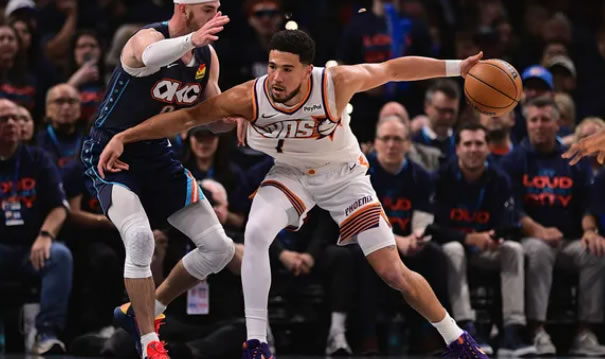
Oklahoma City proves it’s not just talent—but control, depth, and timing—while Phoenix runs out of answers early in the series.
The Oklahoma City Thunder didn’t just win Game 2—they confirmed what Game 1 hinted at. A 120–107 victory over the Phoenix Suns gives them a 2–0 series lead, but more importantly, it shows a clear gap in execution, rhythm, and overall control. This wasn’t a fluke or a one-night explosion. This is starting to look like a pattern.
What stands out immediately is how different these two teams feel when the game tightens. Phoenix came into Game 2 with urgency, and to their credit, they looked far more competitive early. The pace was better, the shot selection improved, and for stretches, they actually matched Oklahoma City’s energy. But here’s the problem—the Thunder don’t just rely on energy. They rely on structure. And structure tends to win in playoff settings.
Oklahoma City once again showed why they’ve become one of the most complete teams in the league. Their offense flows without forcing anything. They’re not dependent on one player having a huge night. Instead, it’s a constant wave of contributions. Whether it’s efficient scoring from the perimeter, smart cuts inside, or simply making the extra pass, everything looks intentional. Nothing feels rushed.
A big part of that is their ability to balance scoring. Instead of one player carrying the load, OKC spreads it out. Multiple players in double figures, consistent ball movement, and a willingness to take what the defense gives them. That’s not just good offense—it’s frustrating offense for the opponent. Because you can’t just “stop one guy” and expect things to fall apart.
Defensively, the Thunder might be even more impressive. Phoenix has scorers—plenty of them—but OKC has made everything difficult. Shots are contested, passing lanes are disrupted, and perhaps most importantly, the Suns are being forced into uncomfortable possessions late in the shot clock. That kind of pressure builds over time. It wears you down mentally as much as physically.
Statistically, the difference shows up in efficiency. Oklahoma City shot a higher percentage from the field, moved the ball better, and controlled key moments. Even when Phoenix got close, the Thunder responded quickly. A mini-run here, a couple of defensive stops there, and suddenly the game was back under control. It’s not dominance in the traditional sense—it’s control. And control is often more dangerous.
For Phoenix, this loss is more concerning than the Game 1 blowout in some ways. In Game 1, you could blame a bad night. Poor shooting, lack of rhythm, maybe just an off performance. But in Game 2, they were better—and still lost by double digits. That’s where the real concern starts.
The Suns’ biggest issue right now isn’t effort—it’s consistency. They can play well for stretches, but they can’t sustain it. Every time they build momentum, something breaks down. A missed defensive rotation, a forced shot, a turnover at the wrong time. And against a team like Oklahoma City, those small mistakes get punished immediately.
There’s also a noticeable difference in pace control. Phoenix wants to play faster, create offense early, and rely on scoring bursts. Oklahoma City, on the other hand, is comfortable slowing things down when needed. They dictate tempo instead of reacting to it. And right now, that’s giving them a huge advantage.
Another key factor is depth. The Thunder bench continues to provide meaningful minutes, keeping the energy consistent even when starters rotate out. Phoenix, meanwhile, feels more top-heavy. When their main options aren’t clicking, the drop-off is noticeable. In a long playoff series, that matters more than people think.
Looking ahead, the series now shifts with Oklahoma City holding a 2–0 lead, and historically, that’s a very difficult hole to climb out of. It’s not impossible—but it requires near-perfect execution moving forward. Phoenix will need to win at home, adjust defensively, and find a way to disrupt OKC’s rhythm. Right now, that’s easier said than done.
From an analytical perspective, the Thunder are doing exactly what championship-level teams do early in a series. They identify weaknesses, exploit them, and then repeat the process until the opponent proves they can adjust. So far, Phoenix hasn’t shown that adjustment.
There’s also a mental edge starting to develop. Oklahoma City looks confident, composed, and in control. Phoenix, while still competitive, is starting to feel reactive. And in the playoffs, confidence can shift a series just as quickly as strategy.
If this continues, the question won’t be whether Oklahoma City wins the series—it’ll be how quickly. That might sound premature, but two games in, the gap looks real. The Thunder aren’t just winning—they’re dictating the terms of how these games are played.
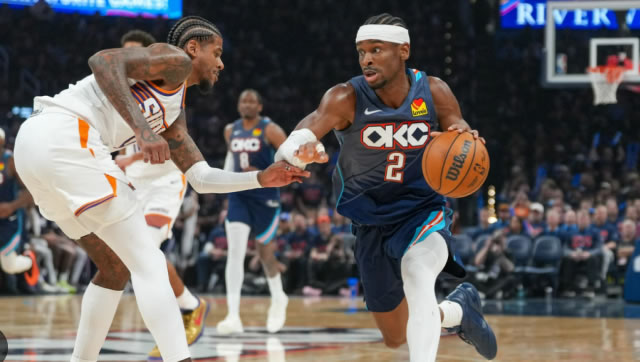
That said, the playoffs are known for momentum swings. One strong performance from Phoenix could change the narrative. But as of now, Oklahoma City looks like the more complete, more prepared, and more dangerous team.
Game 2 wasn’t just another win. It was confirmation. And for the Suns, it was a reminder that being competitive isn’t enough—you have to be better.