Magic One Win Away, Pistons Still Loud: A 3–2 Series Headed Back to Orlando with Just Enough Chaos
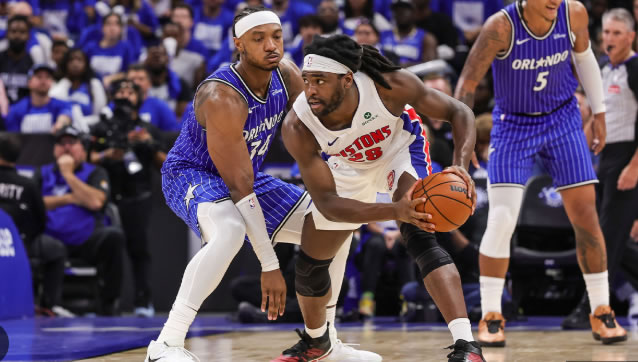
Orlando has the edge, Detroit has the urgency, and Game 6 now sits at the intersection of structure and desperation.
The Orlando Magic lead the Detroit Pistons 3–2, which sounds comfortable until you actually watch the games. This series has not followed a clean script. It has lurched, swung, and occasionally ignored logic altogether. Now it returns to Orlando for Game 6, where control meets urgency in a way that tends to produce either clarity or chaos.
Game 5 was a good summary of the entire matchup. Orlando’s leading scorer finished with 28 points, 9 rebounds, and 5 assists, operating efficiently within the flow of the offense. A secondary option added 22 points, including four three-pointers, while the team as a whole shot around 49 percent from the field and recorded 25 assists. The numbers reflect what Orlando has done best in this series: share the ball, find space, and trust multiple options.
Detroit’s response was familiar. Their top scorer delivered 31 points, but it came on heavy usage, requiring over 25 shot attempts. A second contributor added 19 points, yet the overall offense struggled to maintain rhythm. The Pistons shot approximately 44 percent and generated closer to 20 assists, a gap that continues to define the series.
The difference is not just efficiency. It is how that efficiency is created.
Orlando plays with intention. Their possessions tend to begin with structure and end with options. They average roughly 26 assists per game in the series, and their turnover count has remained relatively low. That combination produces a steady stream of high-quality shots, particularly from the perimeter and at the rim.
Detroit, by contrast, leans heavily on individual creation. When it works, it looks explosive. When it does not, it stalls quickly. Their assist numbers lag behind, and their shot profile includes a higher volume of contested midrange attempts. Over the course of a game, that difference becomes difficult to overcome.
There is also a noticeable contrast in late-game execution. Orlando has been more composed in closing stretches, slowing the pace when needed and relying on set plays that produce reliable looks. Detroit has shown flashes of brilliance late, but also moments where possessions become rushed or overly dependent on one player.
And yet, despite all of this, the Pistons are still in the series. That is what makes it interesting.
They have managed to win two games by disrupting Orlando’s rhythm, increasing defensive pressure, and turning missed shots into transition opportunities. When Detroit pushes the tempo and forces Orlando out of its half-court comfort zone, the balance shifts.
Game 6 now becomes a question of which version of the series shows up.
From a statistical perspective, Orlando holds the clearer formula. They shoot slightly better overall, move the ball more effectively, and commit fewer turnovers. Their rebounding has also been more consistent, giving them extra possessions that matter in close games.
Detroit’s path is narrower but not impossible. They need efficiency from their primary scorer, support from secondary players, and a defensive performance that creates turnovers and easy points. Most importantly, they need to avoid falling into long stretches of isolation basketball that play directly into Orlando’s defensive scheme.
Prediction for Game 6:
Playing at home, Orlando has the advantage of environment and identity. Their role players tend to shoot better, their spacing improves, and their offense flows more naturally. Expect their leading scorer to produce in the high-20s again, supported by balanced contributions across the lineup.
Detroit will compete. Their urgency will show early, and they may even control stretches of the game if they can generate turnovers and push the pace. A strong scoring performance from their top option, in the 30-point range, is likely necessary to extend the series.
Still, the more reliable structure belongs to Orlando. In a game that may tighten late, that structure should matter.
The most probable outcome is a close contest through three quarters, followed by Orlando creating just enough separation in the final minutes to close the series. Not comfortably, but convincingly enough to avoid a Game 7.